Bangladesh
Painted Paths & Homes
Far out in the western edge of Bangladesh, close to the Indian border and far from the country’s busy tourist trail, lies one of Bangladesh’s most unexpected little treasures: Alpona Village.
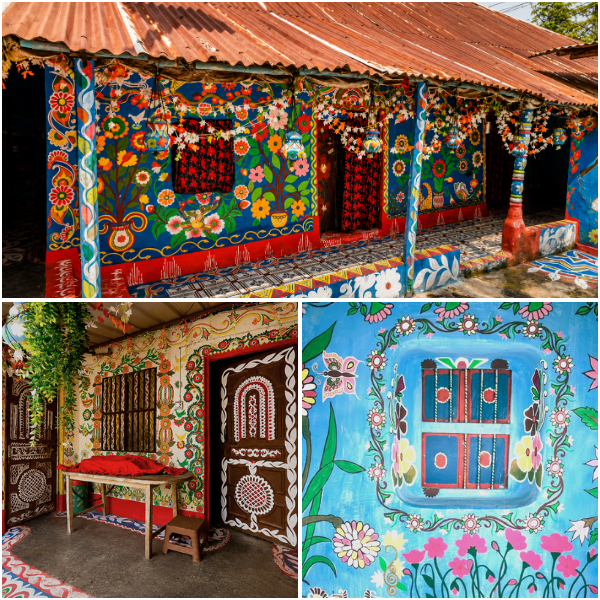
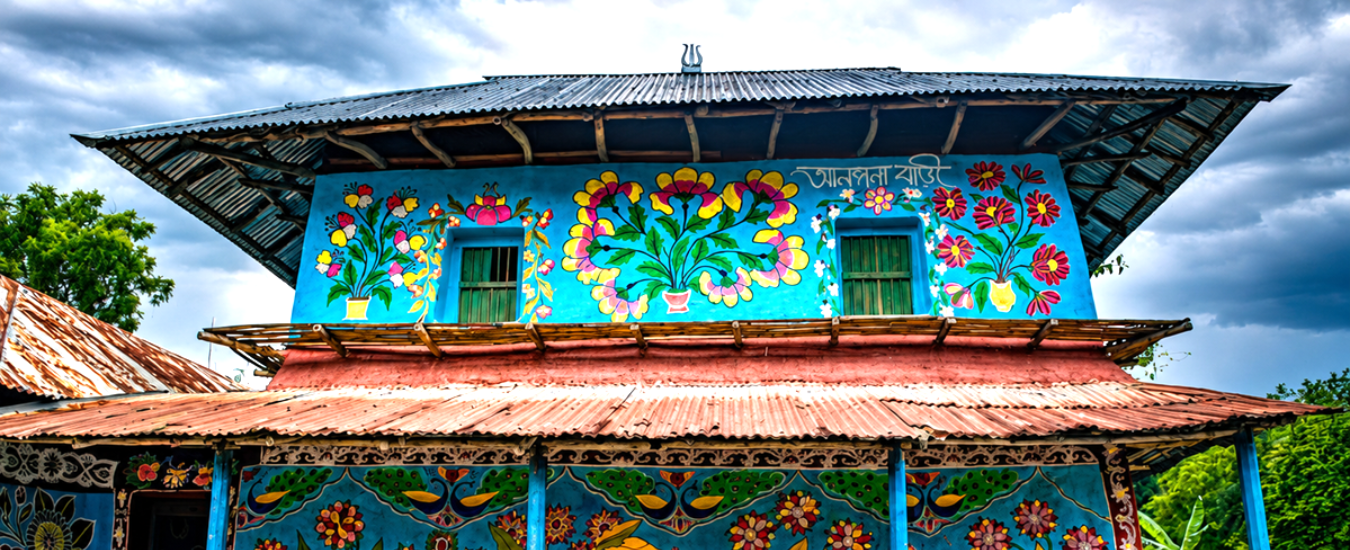
Known locally as Tikoli, this quiet rural community in Chapainawabganj has transformed itself into a living piece of folk art. Houses, courtyards, pathways and walls burst with colorful hand-painted patterns known as “Alpona,” a traditional Bengali decorative art usually created during festivals and celebrations.
But here, the artwork is not limited to special occasions. It has become part of everyday life.
What makes the village especially remarkable is that the project is largely driven by local women, who carefully paint flowers, birds, geometric designs and traditional symbols across entire homes using bright natural colors. Walking through the village feels almost like stepping inside a giant open-air art gallery – except people actually live there.
The region itself adds to the sense of discovery. Chapainawabganj sits in the far western corner of Bangladesh, separated from the country’s better-known destinations by long stretches of farmland, rivers and mango orchards. It’s a slower, quieter side of Bangladesh that many international visitors never see. Life here moves at a gentle pace, with bicycles, small tea stalls and village markets replacing the noise of the big cities.
The area is also famous across Bangladesh for its mangoes, often considered some of the best in the country. During mango season, the roads become lined with endless orchards and fruit stands, adding even more color to the journey.
Getting there takes a little effort, which is part of what keeps the experience authentic. Most travelers first head to Rajshahi by domestic flight, train or road from Dhaka. From Rajshahi, it’s a scenic drive through rural countryside toward Chapainawabganj and the village itself.
And that’s exactly why Alpona Village feels so special.
This is not a polished tourist attraction built for crowds. It is a genuine community project hidden in one of Bangladesh’s most remote corners – a place where art, tradition and village life blend together in the most colorful way possible.